

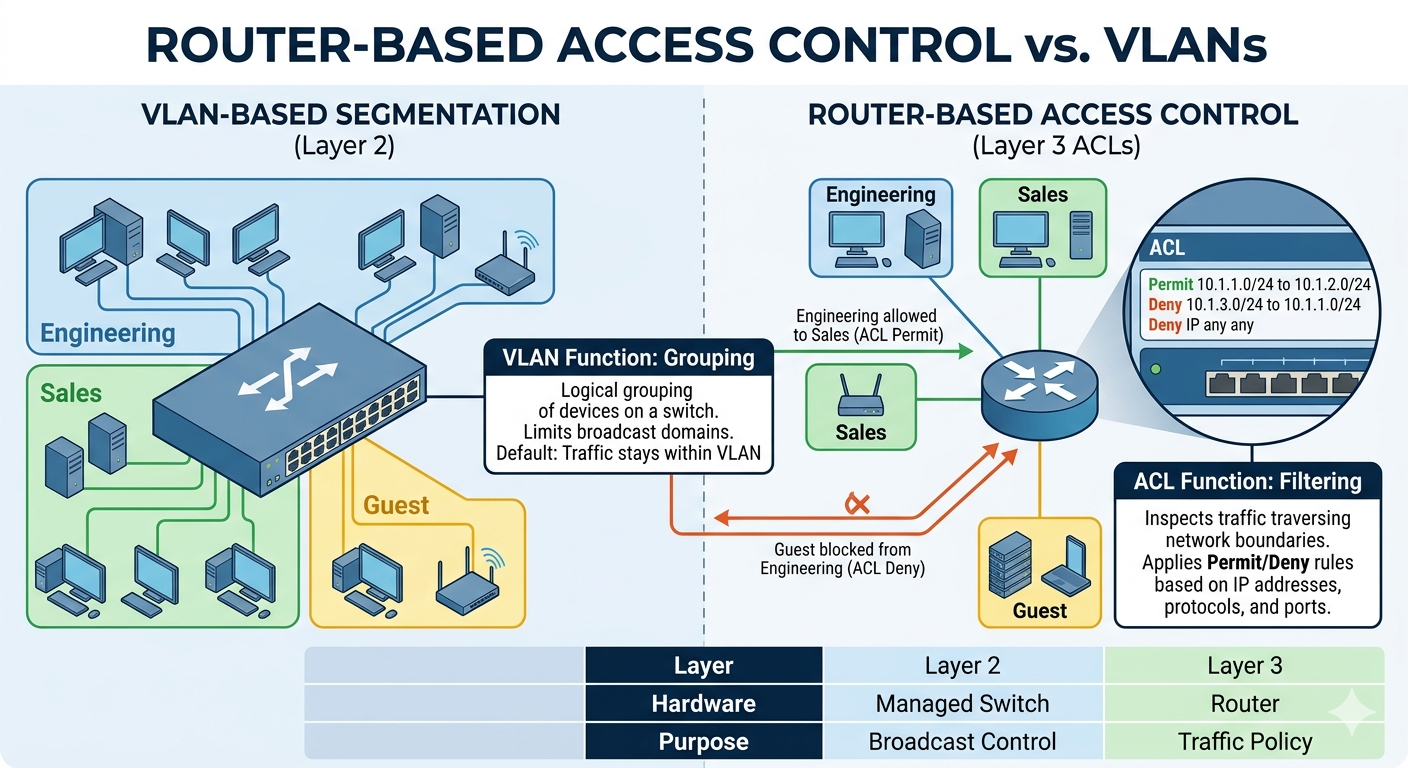

Both router-based access control features and VLANs can be used to manage network access, but they have different strengths and weaknesses.
Advantages of Router-Based Access Control Features:
Simpler Configuration: Router-based access control features are often easier to configure than VLANs, especially for small home networks.
- Less Overhead: These features typically require less hardware and software overhead than VLANs.
- Cost-Effective: Router-based access control features are often built into routers or can be enabled through firmware updates, making them a cost-effective option.
- Easy to Implement: These features are often easy to implement, even for small home networks with limited technical expertise.
Disadvantages of Router-Based Access Control Features:
- Limited Flexibility: Router-based access control features may not offer the same level of flexibility as VLANs, particularly if you need to isolate specific devices or segments within a network.
- Security Risks: If not configured properly, router-based access control features can introduce security risks, such as allowing unauthorized access to sensitive areas of the network.
Advantages of VLANs:
- Greater Flexibility: VLANs offer more flexibility than router-based access control features, allowing you to isolate specific devices or segments within a network.
- Improved Security: VLANs provide a higher level of security, as they can be used to restrict access to sensitive areas of the network.
Disadvantages of VLANs:
- Complexity: VLANs are often more complex to configure than router-based access control features, particularly for small home networks.
- Cost: VLANs may require specialized hardware and software, adding cost to the setup.
Recommendation:
For a small home network with limited technical expertise, I would recommend using router-based access control features over VLANs. These features are often easier to configure, less expensive, and can provide sufficient security and flexibility for most small home networks.
However, if your small home network requires more advanced security or isolation capabilities, such as:
- Isolating devices on the same physical network
- Restricting access to specific segments of the network
- Improving overall network security
then VLANs may be a better option. Ultimately, the choice between router-based access control features and VLANs depends on your specific network requirements and technical expertise.
Alternative Options:
- Guest Network: Create a guest network using router-based access control features to isolate visitors from sensitive areas of the network.
- Port-Based Access Control (PBAC): Use PBAC to restrict access to specific ports or devices, providing a simpler alternative to VLANs.
In summary, while both router-based access control features and VLANs can be used to manage network access, I recommend using the former for small home networks with limited technical expertise due to their simplicity, cost-effectiveness, and ease of implementation.